Fragmented authority
Providers, catalogs, identities, workflows, and evidence drift apart when no governed source coordinates them.
See Integrity Suite →Iberion develops and governs reusable technology for organizations that need to protect systems, govern behavior, understand fragmented information, integrate intelligence, and operate with evidence.
The portfolio began with media infrastructure and now spans security, data integrity, cognitive systems, operational coordination, and governed AI. Each capability remains tied to its actual implementation and evidence state.
Providers, catalogs, identities, workflows, and evidence drift apart when no governed source coordinates them.
See Integrity Suite →AI may recommend useful action, but it should not quietly become the authority for policy, identity, or runtime state.
See BGC →Teams need health, freshness, diagnostics, escalation, and recovery context in one usable operating view.
See the Number 5 Cockpit →The prospectus provides orientation. The linked product pages carry the deeper description, maturity boundary, and supporting relationships.
Citadel is the security anchor, supported by ring-specific capabilities including Two-Hop, Obscura, and ADDR.
Governance, control, memory, inhibition, and arbitration remain separated so recommendations cannot silently become authority.
Relational, vector, knowledge, identity, and ingestion layers prepare information for trustworthy use.
Number 5 and its operating products connect governed evidence to useful action without replacing the authority of underlying systems.
Citadel’s premium case is not encryption alone. It combines protected transport, protected DNS and route integrity, separated ingress and egress, private destination handling, endpoint privacy, and device-assurance design inside one evidence-bounded architecture.
Encrypted transit plus protected DNS and route integrity form the live base of the service.
Provider-separated ingress and Internet-facing egress reduce an ordinary single-position observer’s ability to reconstruct the complete journey. This is not a promise of absolute anonymity or legal untraceability.
Private trigger-to-destination mapping keeps the private trigger inside the Citadel-integrated client rather than submitting it to public DNS.
Obscura client protection has physical-device evidence while its server counterpart remains separate. Device Assurance is implemented and corpus-verified but is not presented here as deployed or qualified.
The premium thesis rests primarily on Two-Hop separation, strengthened by the coordinated protection layers around it. This price is retained as a review position—not a public offer—until the controlled Citadel commercial record is approved and the live checkout, fulfillment, success, cancellation, and webhook path are configured and verified.
Canonical identity, normalization, and durable state reduce dependence on brittle provider-facing representations.
Canonical identity layer →Persistent context and AI support operate inside explicit authority, evidence, inhibition, and escalation boundaries.
AI governance portfolio →Health, diagnostics, telemetry, and registered evidence separate an implemented idea from a qualified operating capability.
Enterprise operations →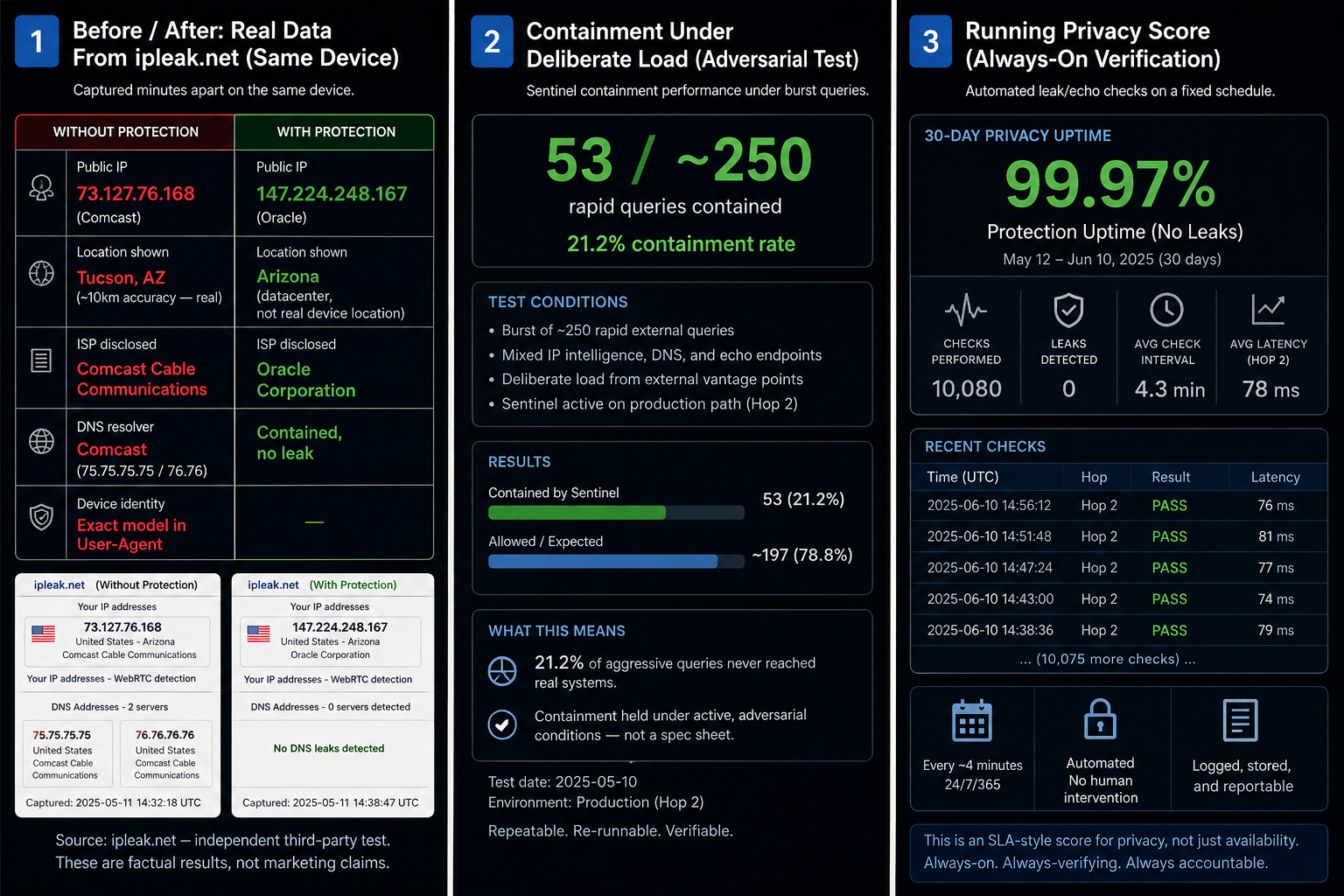
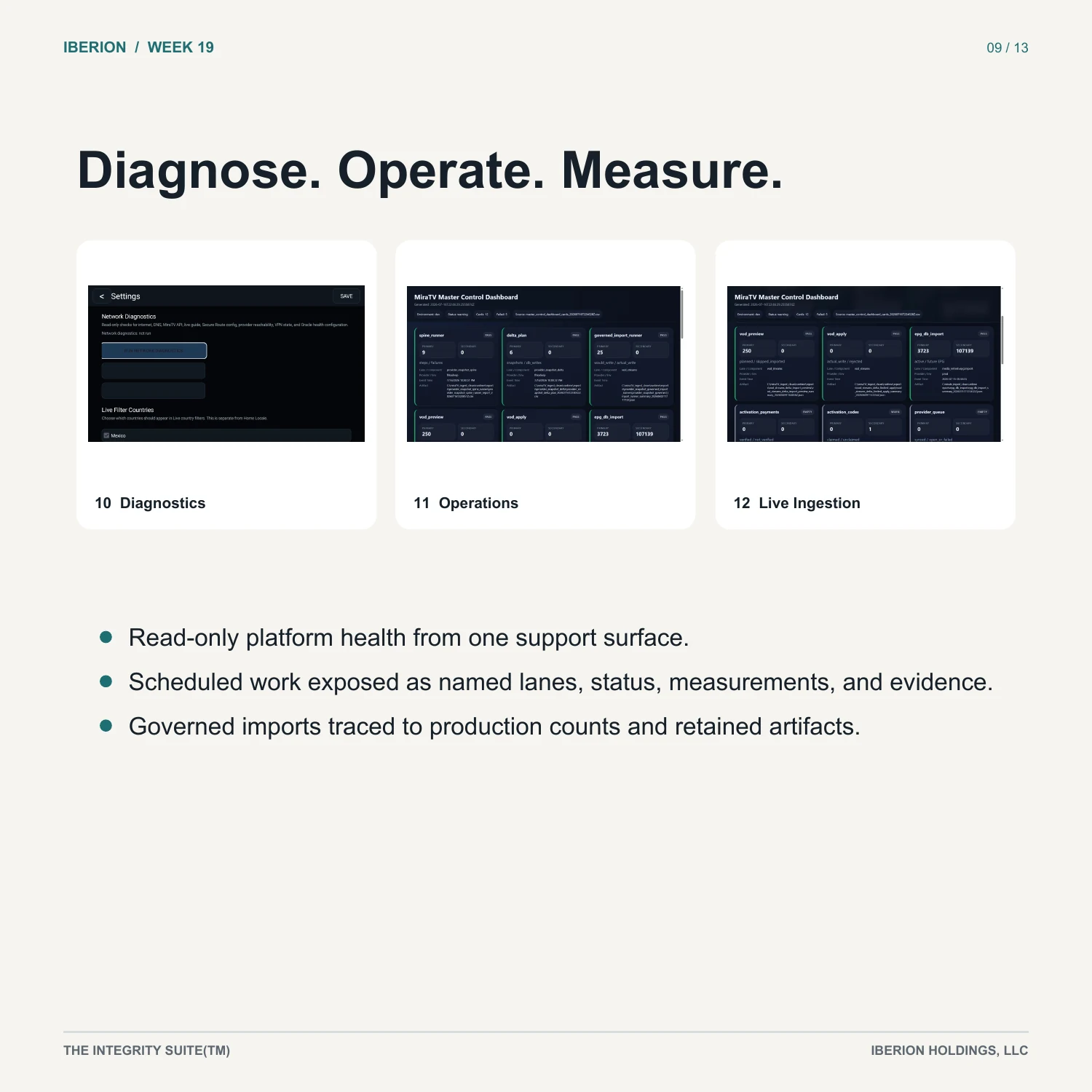
The portfolio includes working application surfaces, operational dashboards, media-ingestion evidence, diagnostics, privacy controls, and governed demonstration material. Public descriptions remain bounded to the registered scope behind each claim.
Bounded discovery and current-state review.
Defined scope, evidence criteria, ownership, and exit conditions.
Product, module, API, device, white-label, or enterprise arrangements where approved.
Governed support and operating services with explicit authority and escalation.
Commercial boundary: models shown here are documented pathways, not a public price schedule or pre-approved contractual terms. Scope, rights, territory, support, exclusivity, evidence access, and fees require a separate written agreement.
Prospectus, product pages, approved publications, and bounded demonstrations.
Named evidence, deployment scope, limitations, and fit for the prospect’s use case.
Confidential architecture, implementation, ownership, and legal material only under the applicable controls.
The portfolio reflects long-form work in enterprise architecture, media systems, database design, governed AI, operational diagnostics, service construction, and commercial product strategy.
Company and leadership contextThe presentation can explain the system. Governed architecture, evidence, engineering, publication, and legal records remain the sources of authority.